Correct batten spacing is one of the most important parts of roofing. If your battens aren’t spaced correctly, tiles won’t sit properly, won’t hook correctly, and the roof can fail inspection or suffer premature failure.
This beginner-friendly UK guide explains batten spacing in plain English — including how to measure your gauge, common UK rules, and how to set battens correctly the first time.
What You’ll Learn
- What “batten gauge” actually means
- Standard UK batten spacing for concrete & clay tiles
- Tools you need (simple beginner tools)
- How to calculate the correct spacing
- Step-by-step: how to set battens properly
- Common mistakes beginners make
- Pro tips from real roofers
Understanding Batten Spacing
Batten spacing (also called tile gauge) is the distance from the top edge of one batten to the top edge of the next.
This spacing depends on the tile size, tile profile, and roof pitch, which is why different tiles require different gauges.
For beginners, remember:
- You never guess batten spacing.
- You always measure the tiles on site.
- The spacing is written on the tile manufacturer’s spec sheet.
- You calculate the spacing based on gauge and the roof’s eaves/ridge measurements.
Quick Answer: Typical Batten Spacing
Most concrete and clay roof tiles in the UK are spaced between 345mm – 355mm, but exact spacing depends on the tile manufacturer and roof pitch. Always measure the tile gauge before fixing battens.
| Tile Type | Typical Batten Gauge |
| Concrete Interlocking Tiles | 345mm – 355mm |
| Clay Plain Tiles | ~ 100mm |
| Large Format Concrete Tiles | Manufacturer Specific |
Always check manufacturer guidance.
Standard UK Batten Spacing (Quick Reference)
Every tile is different — but here’s a rough guide:
Concrete Interlocking Tiles (Marley, Redland, Sandtoft)
- Typical gauge: 310–345mm
- Common gauged spacing: 320mm / 330mm
Clay Interlocking Tiles
- Typical gauge: 300–340mm
Double Roman / Flat Profile Tiles
- Typical gauge: 310–320mm
Plain Tiles (clay or concrete)
- Gauge: 100mm (fixed)
- Very easy for beginners
Important:
Always check the manufacturer’s guide — battens for tiles can vary by 10–20mm depending on tile, roof pitch, and headlap.
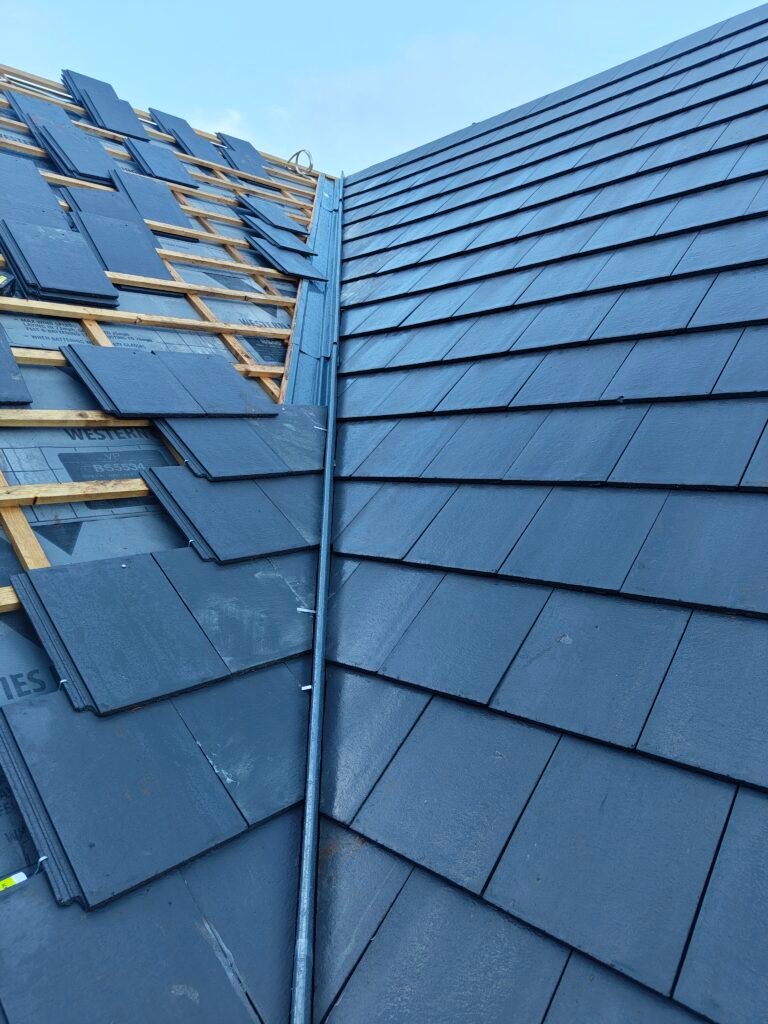
These are probably the most common interlocking tiles we use on site, however this can change depending on the site. This was at a Kier Site in Dawlish ( Massive Job ). This had a numerous amount of valleys and ridge.
Tools You Need (Beginner-Friendly)
- Tape measure
- Chalk line (for straight battens)
- Pencil/marker
- Hammer or nail gun
- Spirit level
- Roofing square (optional but helpful)
How to Calculate Your Batten Gauge (Super Simple Method)
You only need to measure two tiles:
Step 1 — Lay two tiles together on the scaffold
Overlap them like they would sit on the roof.
Step 2 — Hook the top tile under the bottom lug
Make sure it’s seated correctly.
Step 3 — Measure from tile nose to nose
This measurement = your gauge.
Example:
You measure 640mm from the nose of one tile to the next.
Divide by 2 tiles:
640 ÷ 2 = 320mm gauge
Your batten spacing = 320mm.
This is one the key areas you want to get right. Done wrong, it could cause you a big headache down the line. How to Measure Batten Gauge for Roof Tiles
5. Step-by-Step: How to Set Battens Correctly
Step 1 — Mark your eaves batten
This is fixed and never changes.
Step 2 — Mark your ridge batten
Also fixed.
Step 3 — Snap a chalk line
Keeps all your battens straight.
Step 4 — Work upwards from the eaves
Use your gauge (example: 320mm) and mark:
- 320mm
- 640mm
- 960mm
- 1280mm
…and so on.
Step 5 — Nail each batten securely
Make sure it sits flat — warped battens cause tile lift.
Step 6 — Double-check your gauge every 5 rows
Tiles vary slightly — always re-measure.
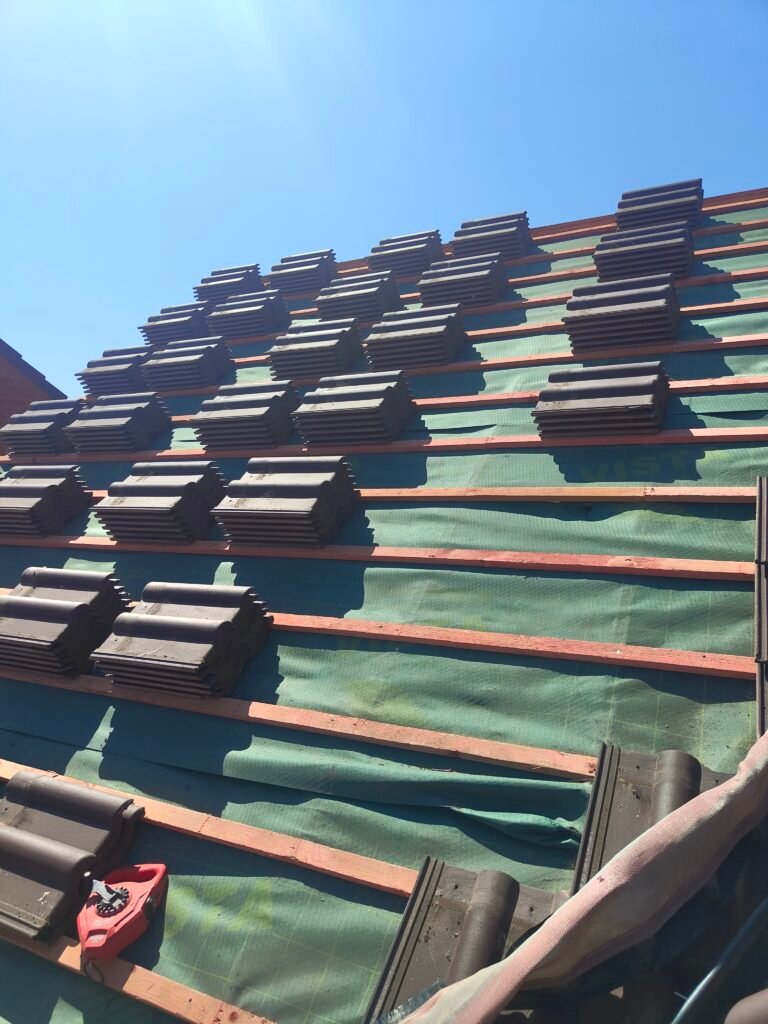
As you can see these are Double Romans and instead of sitting on a half bond, they sit directly on top of each other. This makes it in my opinion easier to tile, harder to make a mistake. How to Install Roof Battens
6. Common Mistakes Beginners Make
- Setting battens without checking the tile gauge
- Measuring from batten centres instead of top edges
- Not allowing for eaves course adjustment
- Ignoring roof pitch differences
7. Pro Roofer Tips
- Always measure real tiles, not a spec sheet alone.
- If your tiles are wet or dirty, clean the lugs — gauge changes if tiles don’t sit properly.
- On new builds, check every pack — mismatched tiles can change gauge.
- Keep battens at 400mm centres max for strength (building regs).
- Store battens off the ground so they don’t warp overnight.
8. Frequently Asked Questions
What is the most common batten spacing?
Usually 320–330mm for concrete tiles.
Do concrete and clay tiles use the same spacing?
Not always. Always measure both tiles.
Can I use the spec sheet only?
You shouldn’t. Always double-check with real tiles.
What happens if battens are spaced wrong?
Tiles won’t hook or lock properly, the roof will fail inspection, or tiles may blow off in wind.
Correct batten spacing ensures your tiles sit properly, hook securely, and comply with UK roofing standards. Taking the time to measure gauge accurately before fixing battens will prevent costly mistakes later.
If you’re installing battens from scratch, see our full guide on how to install roof battens correctly.
Pingback: Why Roof Tiles Crack (And What It Usually Means) - rooflogicinc.co.uk
Pingback: How to Measure Batten Gauge for Roof Tiles - rooflogicinc.co.uk
Pingback: How to Cut Roof Tiles Safely (Beginner UK Guide: Tools, Methods & Tips) - rooflogicinc.co.uk