Introduction
Roof battens are one of the most important structural parts of a roof. When installed correctly, they:
- Who it’s for (DIYers / Apprentices / Homeowners )
- Why mistakes matter (roof failure, tile slip, warranty issues)
- UK context (BS5534)
Roof battens are one of the most important structural components of a pitched roof. When installed correctly, they ensure tiles or slates sit straight, stay secure, and meet UK roofing standards.
Incorrect batten installation is one of the most common causes of roof failures, including slipped tiles, uneven courses, and premature wear.
This guide walks you through how to install roof battens step-by-step, following best roofing practices used by professional roofers in the UK.
Who This Guide is For
This guide is ideal for:
- Apprentice roofers learning correct batten installation
- DIYers tackling small roofing projects
- Homeowners wanting to understand professional roofing standards
Tools & Materials You’ll Need
Roofing work involves working at height. Always use appropriate access equipment, fall protection, and follow health and safety guidelines. If unsure, consult a professional roofer.
Tools:
- Tape measure
- Roofing square
- Chalk line
- Spirit level
- Hammer or nail gun
- Pencil/marker
- Utility knife (for underlay)
- String line
Materials:
- BS5534 graded battens (25×38 or 25×50)
- Underlay (breathable membrane)
- 40–65mm nails (clout or ring shank)
Step 1 — Install the Underlay
Before battens go on, the felt/membrane must be correctly installed.
How to do it:
- Start at the eaves
- Roll membrane horizontally
- Overlap layers by 100–150mm
- Keep it flat and tight, no big sags
- Nail to rafters, NOT between them
- Leave small tension so battens don’t pull it up
Common mistakes:
Wrinkles or dips
Underlay sagging between rafters
Too many nails (just enough to hold it)
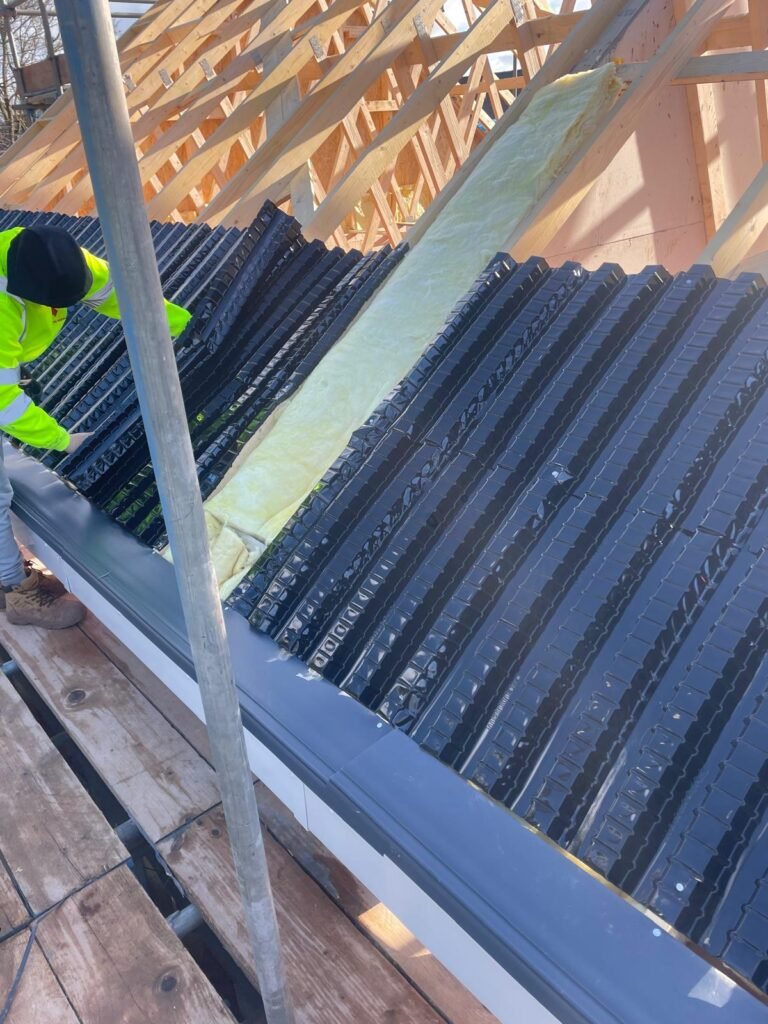
This a standard for new builds. They require a high amount of insulation with insulation going underneath the felt and fire break insulation going over the top of felt. Rafter is also a standard since you wouldn’t want a condensation on your roofs. How to Felt a Roof is the first step into felt and battening a roof.
Step 2 — Mark Your Eaves Batten Position
This is crucial — the eaves batten sets the entire roof.
How to do it:
- Measure up from the fascia
- Allow for tile/slate overhang
- Strike a chalk line across the rafters
- Double-check the measurement before fixing anything
Tips:
- For tiles → check manufacturer eaves overhang
- For slates → allow 50–70mm overhang depending on pitch
Why:
- Leaves 50mm overhang of tile
- Allows water to go into the gutter system
Step 3 — Mark Gauge Lines Up the Roof
You already know the gauge from your spacing article.
Now you’re transferring it onto the roof.
Method:
- On the far left rafter → mark each gauge up to the ridge
- Do the same on the far right rafter
- Snap chalk lines between these marks
Why this matters:
- It keeps your battens dead straight
- You won’t “creep” uphill or downhill
- It removes guesswork
Step 4 — Fix the Eaves Batten First
Your first batten determines the alignment for all others.
How to fix it:
- Position batten on the chalk line
- Check it with a spirit level
- Nail with 2 nails per rafter
- Leave 5mm joint gap between battens for expansion
- Use a string line to make sure it’s perfectly straight
Step 5 — Install Battens Up the Roof (Row by Row)
Now you follow each chalk line.
How to do it:
- Place batten on the chalk line
- Check alignment with string line
- Nail securely
- Continue working upwards until you reach the ridge
Pro tip:
If a rafter dips or rises, pack out the batten to keep everything level.
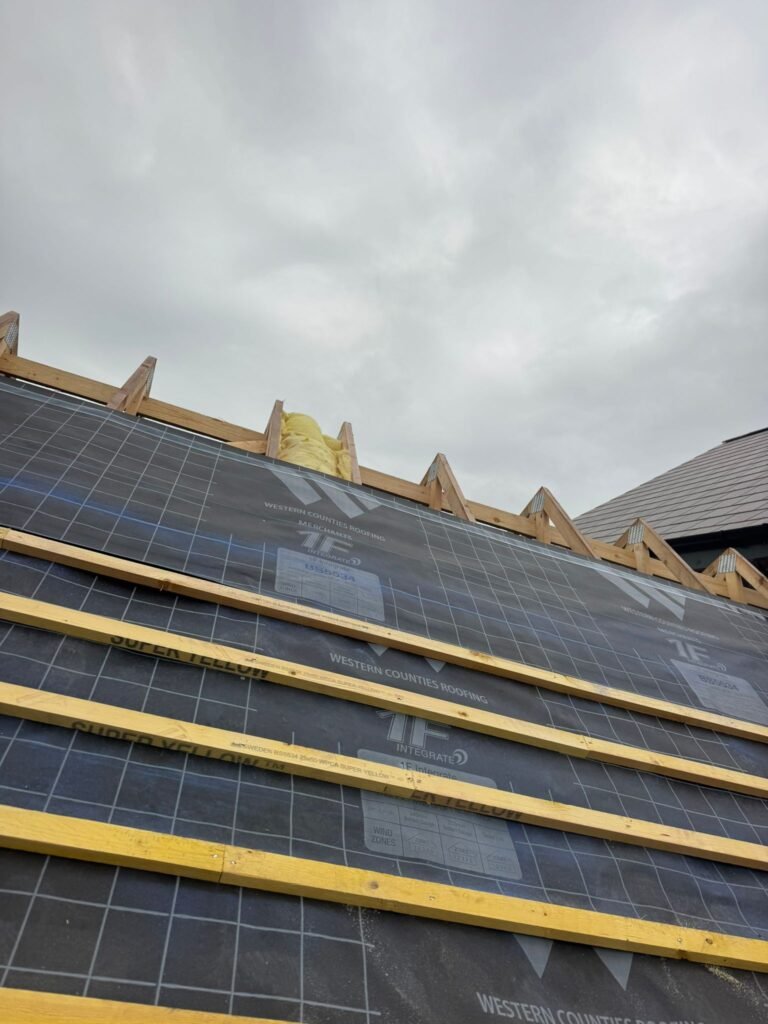
This is two garages, the insulation in the middle is to slow down fires from one plot to another. Usually there is not much insulation on garages unless they are attached to the house. How to Install Roof Battens to your can be challenging, even for qualified still make mistakes in this area. Once at Taylor Wimpey site, I put my starting batten at the wrong height and only realised the mistake at the top when it was complete. We had to strip the battens to half way to correct it.
Step 6 — Straighten Every 3–4 Battens
Even good roofers drift over time.
Use a string line across:
- at the eaves
- mid-roof
- near the ridge
If battens begin to snake left/right:
- Adjust the next batten
- Loosen and re-fix if needed
- Always trust your string line
Step 7 — Join Battens Correctly
When one batten ends and another begins:
Do:
Leave 5mm gap
Stagger joints (don’t line them up)
Nail both sides of the joint
Keep both battens level
Don’t:
Butt battens together
Overlap battens
Place joints on weak rafters
Step 8 — Fix Battens Around Valleys, Hips & Dormers
Each roof feature needs specific treatment:
Valleys
- Cut battens at 45°
- Leave 5–10mm gap from valley boards
- Maintain gauge on both sides
- Use multiple string lines
Hips
- Run battens into hip rafter
- Trim ends neatly
- Keep gauge consistent on both sides
Dormers / Chimneys
- Keep battens level around obstacles
- Cut openings cleanly
- Maintain alignment using string lines
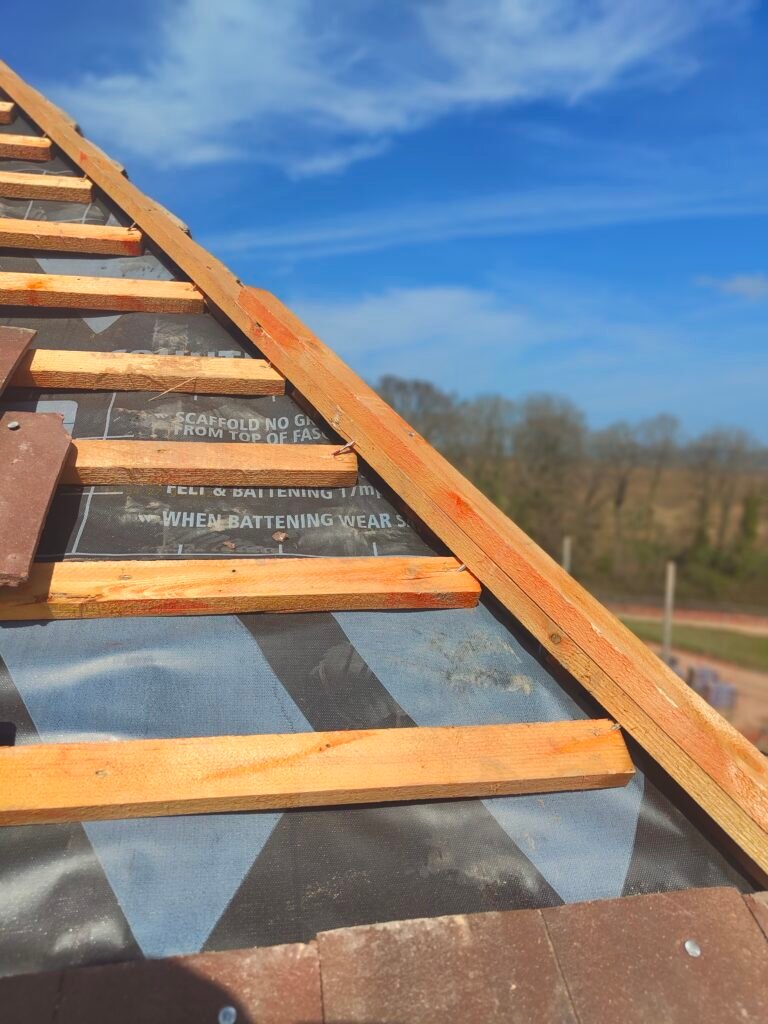
Step 9 — Install the Ridge Batten
Top batten supports ridge tiles or a dry ridge system.
Key points:
- Position based on ridge roll thickness
- Fix securely into rafters
- Keep it straight — this controls your ridge line
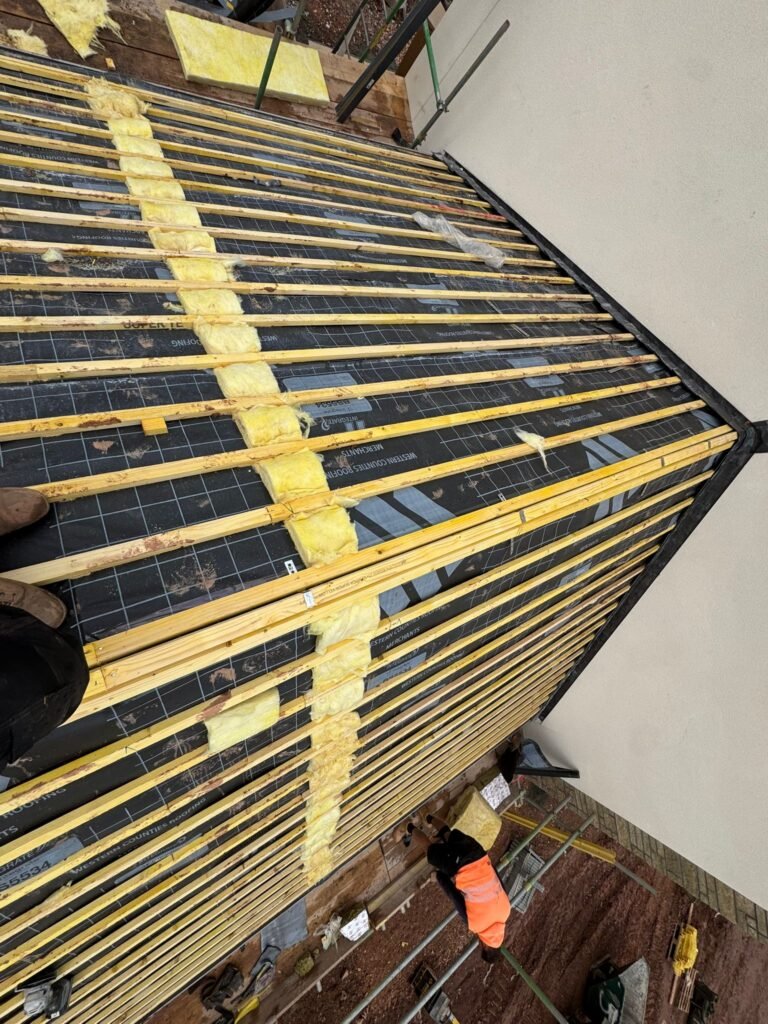
Those metal straps come with a ridge kit and are used to for extra support to hold down the ridge batten. With insulation in between the batten spacing. How to Install a Dry Ridge System (Beginner-Friendly UK Guide)
Common Mistakes to Avoid
Using ungraded battens
Guessing gauge
Crooked battens
Battens too close to underlay (should float above it)
Not packing out on uneven rafters
Over-nailing
No expansion gap
Pro Roofer Tips
Always check batten straightness over multiple rafters before fixing permanently. Small errors at the bottom can multiply as you work up the roof.
FAQ
How far apart should battens be?
Depends on tile/slate type — see your spacing article.
Can I join battens anywhere?
Yes, but joints must be staggered, gapped 5mm, and nailed both sides.
How many nails per batten?
Minimum 2 nails per rafter cross-point.
Can battens touch the felt?
Correctly installing roof battens is essential for a durable, straight, and compliant roof. By following these steps and using properly graded materials, you’ll ensure your roof covering performs as intended for years to come.
For spacing rules, tile gauges, and BS5534 requirements, see our full batten spacing guide.
Pingback: How to Install a Dry Ridge System (Beginner-Friendly UK Guide) - rooflogicinc.co.uk
Pingback: Can You Reuse Old Roof Battens? (When It’s OK & When It’s Not) - rooflogicinc.co.uk
Pingback: Roof Batten Spacing for Concrete & Clay Tiles (UK Guide) - rooflogicinc.co.uk
Pingback: How to Measure Batten Gauge for Roof Tiles - rooflogicinc.co.uk
Pingback: How to Cut Roof Tiles Safely (Beginner UK Guide: Tools, Methods & Tips) - rooflogicinc.co.uk