Dry ridge systems have become the UK standard because they are stronger, more weather-resistant, and far more durable than traditional mortar ridges.
This beginner-friendly guide explains, in plain English, how to install a dry ridge system step-by-step — ideal for apprentices, DIYers, and new roofers.
Safety Warning
Ridge work involves working at height. Always use suitable access equipment, secure ladders or scaffolding, and avoid working in wet, windy, or icy conditions. If you feel uncomfortable doing ask a professional.
1. What Is a Dry Ridge System?
A dry ridge system uses mechanical fixings instead of mortar to secure ridge tiles, allowing ventilation while providing a strong, weatherproof finish.
From my experience, new builds always have a dry ridge system. Sometimes you would have a wet verge system on new builds or on private jobs you would have a wet ridge system.
- Ridge unions
- Ridge batten bracket
- Ridge batten
- Ridge roll (vented)
- Screws + clamps
- Ridge tiles
These components work together to secure ridge tiles mechanically while allowing airflow along the ridge line.
Quick Answer: What is a Dry Ridge System?
A dry ridge system mechanically fixes ridge tiles using screws and clamps instead of mortar, improving strength, ventilation, and long-term durability.
2. Tools & Materials You Need
Tools
- Cordless drill
- Impact Driver
- Tape measure
- Stanley knife
- Hammer
- PPE (gloves & goggles)
Materials
- Dry ridge kit (unions, clamps, screws)
- Ridge tiles
- Vented ridge roll
- Ridge batten
- Nails or screws for batten
- Underlay + felt (if not already installed)
3. Step-by-Step: How to Install a Dry Ridge System
Step 1 — Fix the Ridge Batten
A ridge batten must run along the peak of the roof.
- Use batten straps or stainless steel brackets
- Centre the batten along the ridge
- Keep it roughly 40mm above the tiles so clamps can grab properly
- Ensure it’s straight end to end
Tip:
Use a string line for perfect alignment.
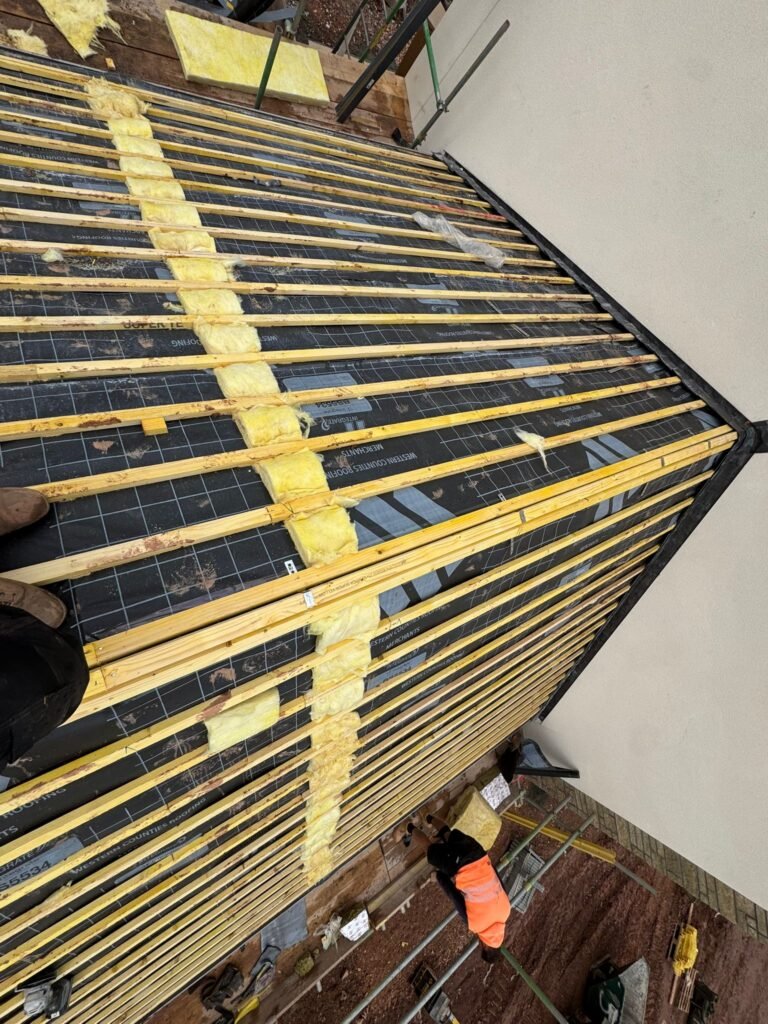
We put this top batten so that we can attach the ridge rollout and to screw down the ridge. How to Lay Roof Battens Correctly (Spacing, Rules & Best Practices and How to Install Roof Battens will help with this.
Step 2 — Lay Out Your Ridge Tiles
Lay the ridge tiles loose down the roof to check:
- Overhang
- Straightness
- Colour consistency
- Length of the run
This helps you get you smaller cut in easier.
Before Installing a dry ridge system, its important to ensure the roof battens are installed correctly, including correct spacing and secure fixing. Poor batten installation can lead to ridge failure over time, cutting down the roofs expiry date. Using Treated roof battens is a also a recommended to improve durability and comply with UK roofing standards.
One of the main advantages of a dry ridge system is improved ventilation (How to Install a Dry Ridge System (Beginner-Friendly UK Guide), which helps prevent condensation and extends the lifespan of the roof.
Step 3 — Install the Ventilated Ridge Roll
Roll out the ridge roll along the ridge:
- Peel the adhesive backing
- Stick the roll to both sides of the tiles/slates
- Press firmly so the corrugated edges mould to the tile shape
- Keep it centred on the ridge line
The ridge roll provides ventilation + weatherproofing.
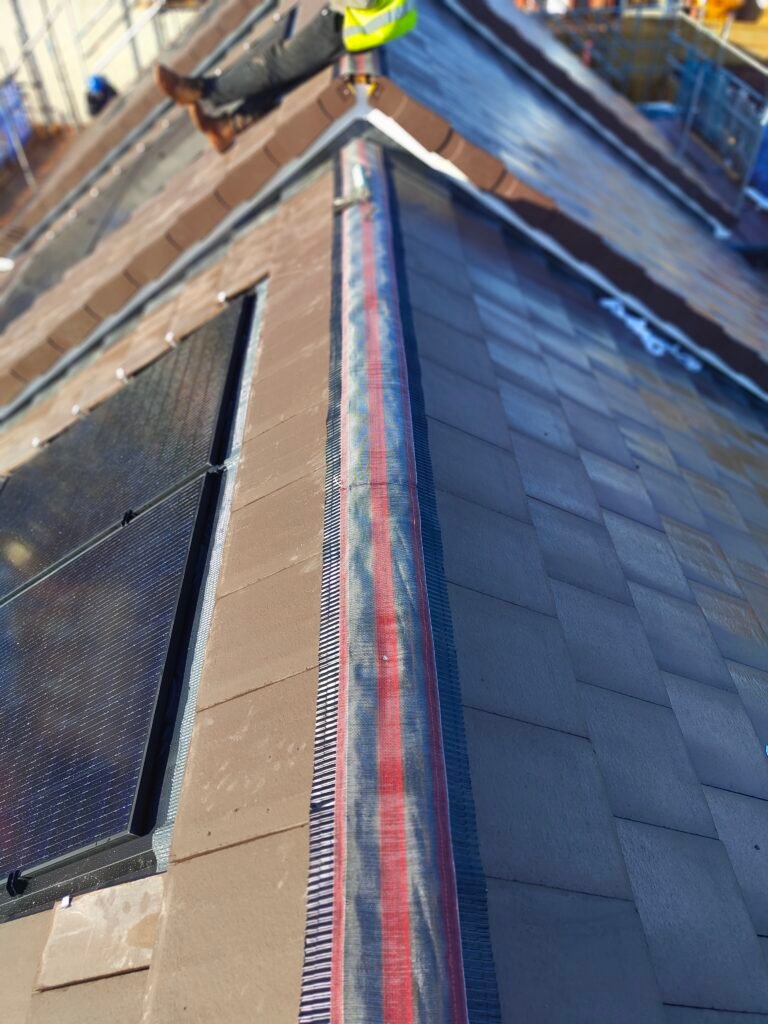
You would put ridge rollout on to give ventilation and also stop water from getting underneath the ridge. You would attach this with nails and keeping it tight as go long nails the rollout, this will help it stick better to the tiles and be more difficult for the water to seep in.
Step 4 — Fit the First Ridge Tile
The first tile is usually fixed at the end of the ridge line.
- Insert a ridge union
- Place the ridge tile over it
- Screw through the union into the ridge batten
- Do NOT overtighten
Once the first one is straight, the rest follow perfectly.
Step 5 — Continue Fitting Each Ridge Tile
For every ridge tile:
- Slide the ridge union under the previous tile
- Fit the next tile
- Insert the central screw
- Tighten gently
The unions automatically set:
- The spacing
- Alignment
- Overlap
This is why dry ridge systems are beginner-friendly.
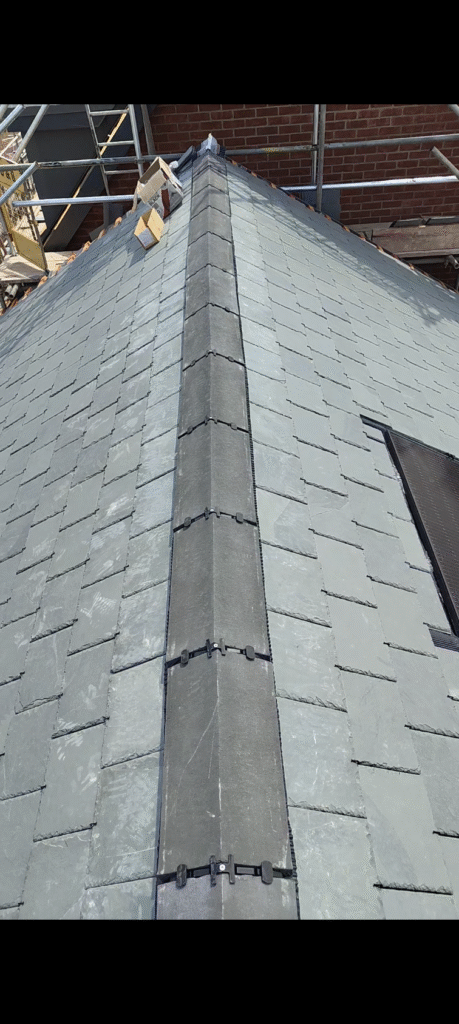
This is a Finished ridge system we done on site with dry ridge system, on a Brazilian slated roof. This was done a Taylor Wimpey site in Topsham.
Step 6 — Finish the Final Ridge or Hip Junction
At the end:
- Use the stop-end tile or finish kit
- Make sure the final ridge is fully clamped
- Trim excess ridge roll with snips
The ridge should look perfectly straight from end to end.
4. Common Beginner Mistakes
Leaving the ridge roll loose (causes leaks)
Overtightening screws (cracks tiles)
Ridge batten too low (unions won’t grip)
Not overlapping ridge roll properly
Not using stainless or galvanised fixings
Forgetting the hip support brackets
5. Pro Roofer Tips
- Always start the ridge at the end most visible from the ground — gives the cleanest look.
- If the tiles don’t sit flat, adjust the ridge batten height.
- Cut ridge roll around chimneys carefully to maintain ventilation.
- Keep a consistent screw torque so every ridge sits the same.
- On windy sites, secure ridge roll with extra tile clips.
FAQ
Can you install dry ridge on any roof?
Yes — concrete tiles, clay tiles, slates, and many older roofs can be upgraded.
Is dry ridge better than mortar?
Yes. It lasts longer, doesn’t crack, and meets modern UK roofing standards.
Do dry ridge systems leak?
Only if the ridge roll is not sealed properly or if battens are the wrong height.
Do you nail or screw the ridge tiles?
Always screw dry ridge — never nail.
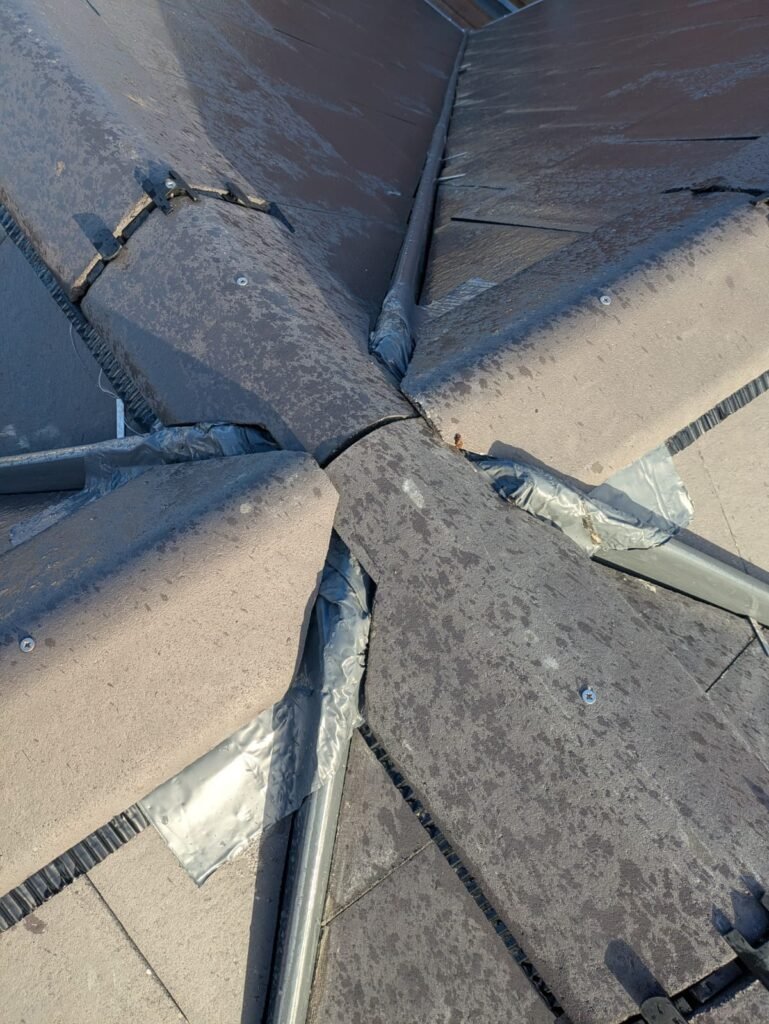
This was a very technical ridge design. With 8 valleys and two ridge overlapping. We put a sticky lead underneath to waterproof it, allowing the water to go down the valley. This was trial and error, I believe we had to cut this numerous times to get the desired outcome.
Pingback: How to Prepare Your Roof for Winter - rooflogicinc.co.uk
Pingback: How to Spot Roof Damage From the Ground - rooflogicinc.co.uk
Pingback: How to Install Roof Battens - rooflogicinc.co.uk