Batten gauge is the distance between each course of roof battens.
If this is measured incorrectly, tiles won’t line up, cuts will be wrong, and the ridge can finish too high or too low. Correct batten gauge is essential for straight tile courses and a professional finish.
What You’ll Learn
- What batten gauge means
- How to measure batten gauge correctly
- Typical gauges for common roof tiles
- Mistakes new roofers make
What Is Batten Gauge?
Batten gauge is the distance from the top edge of one batten to the top edge of the next.
It’s based on:
- The tile manufacturer’s spec
- The length of the tile
- The headlap you must maintain
For example:
A 420mm tile with a 75mm headlap gives a gauge of around 345mm.
Quick Answer: What is Batten Gauge?
Batten gauge is measured from the top of one batten to the top of the next and is based on tile size, head lap, and manufacturer specifications.
A 420mm tile with a 75mm head lap gives a gauge of 345mm.
Always confirm this by dry-laying tiles before fixing battens permanently.
Tools You Need
- Tape measure
- Chalk line
- Pencil/marker
- Tile sample (optional but helpful)
How to Measure Batten Gauge (Step-by-Step)
1. Check the manufacturer’s gauge range
Concrete interlocking tiles usually give a gauge range (e.g., 320–345mm).
Natural slate depends on tile size and exposure zone.
Always check the packaging or specification
2. Measure the eaves course
The first batten’s position determines everything else.
- Place a tile at the bottom
- Ensure proper overhang into the gutter (50–65mm)
- Mark where the first batten should sit
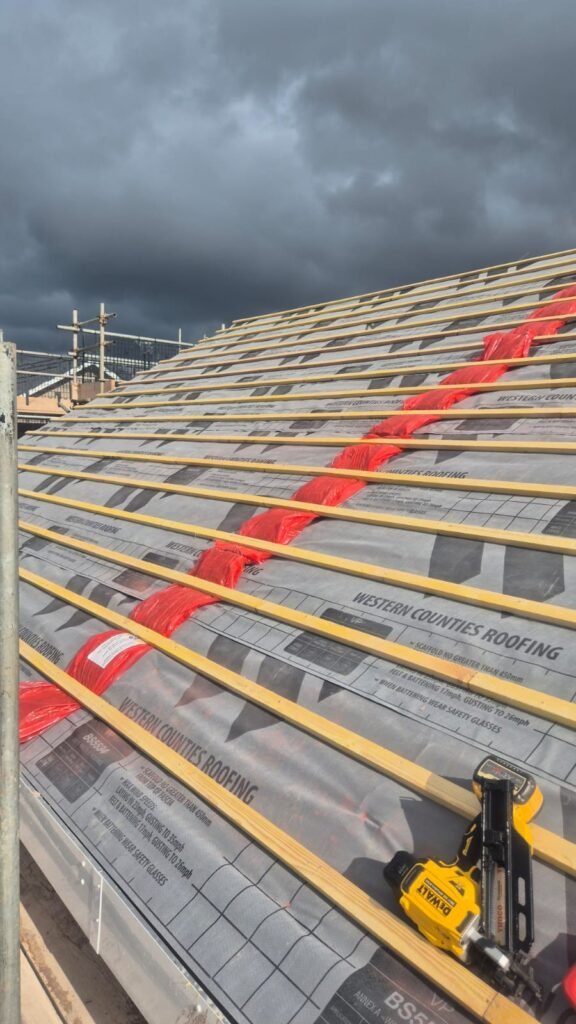
A good little trick is to get batten cut and put it against the fascia, put your tile in line with batten. mark the line and come down 25mm down, this way you know you have the correct amount of hanger into the gutter. How to Lay Roof Battens Correctly (Spacing, Rules & Best Practices)
3. Set Your Chalk Line
Once the first batten is fixed:
- Measure up your chosen gauge
- Mark at least three rafters
- Snap a chalk line
- Fix the next batten perfectly on the line
Repeat this up to the ridge.
Quick Batten Gauge Reference Chart
| Tile Type | Typical Gauge | Notes |
|---|---|---|
| Concrete Interlocking | 320–345mm | Depends on headlap requirement |
| Fibre Cement Slate 600×300 | 250–260mm | High exposure areas use smaller gauge |
| Natural Slate 500×250 | 220–230mm | Also depends on lap requirement |
| Double Roman | 300–315mm | Manufacturer specific |
Common Mistakes (Beginners Do These Often)
Measuring from the bottom of the batten instead of the top
Forgetting to check exposure zone (UK rules matter)
Changing gauge halfway up the roof
Running battens without snapping a chalk line
Not checking at least 3 rafters before fixing
These lead to uneven courses, tile rattling, and ridge height problems.
Pro Roofer Tips
- Always lay 3–4 tiles dry to double-check the gauge before committing.
- If you’re between gauges, choose the tighter (smaller) one — it improves weatherproofing.
- Keep battens perfectly straight — one wonky batten makes the whole roof look bad.
FAQ
How do I know if my gauge is correct?
Lay a dry run of tiles — if they sit naturally on the nibs and line up with each other, your gauge is right.
Does gauge change for hips/valleys?
The gauge stays the same, but batten lengths and cuts change.
Can batten gauge be different left vs right?
No — your roof will not tile correctly. Gauge must be uniform across the entire elevation.
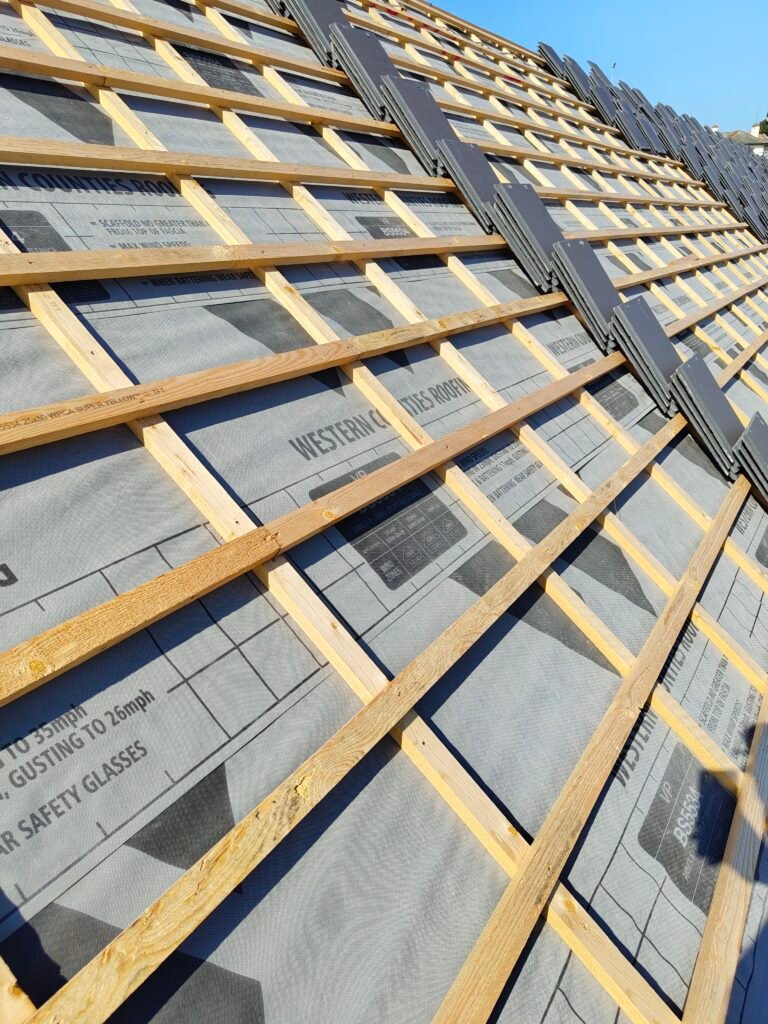
Counter Battened with Interlocking Tiles gauge.
Measuring batten gauge correctly is essential for straight tile courses and a clean roof finish. Taking the time to measure properly before fixing battens will prevent alignment issues, incorrect cuts, and problems at the ridge.
Pingback: Roof Batten Spacing for Concrete & Clay Tiles - rooflogicinc.co.uk
Pingback: How to Cut Roof Tiles Safely (Beginner UK Guide: Tools, Methods & Tips) - rooflogicinc.co.uk