Roof felt — also known as breathable membrane — is the first protective layer beneath roof tiles. When installed correctly, it protects the roof from wind-driven rain, snow, and condensation.
If roof felt is installed incorrectly, water can track beneath tiles, leading to leaks, damp timber, and costly repairs.
What You’ll Learn
- The tools you’ll need
- How much overlap to use
- How to fix roof felt correctly
- The biggest beginner mistakes to avoid
Safety Warning
Roofing work involves working at height. Always use suitable access equipment, secure ladders properly, and avoid working in wet, windy, or icy conditions. Working in these conditions will make the work more harder, but also potentially dangerous.
Tools
- Stanley Knife
- Hammer Tacker/Hammer
- Tape Measure
- Chalk Line
Materials
- Breathable membrane rolls
- Galvanised clout nails or staples
- Underlay
- Installation
Quick Answer: How Do You Felt a Roof?
Roof felt is laid horizontally from the eaves upwards, overlapping each layer by at least 100-150mm, and fixed temporarily before battens are installed.
1. Start at the Bottom of the Roof
Always felt a roof from the eaves upward.
- Roll out the first strip along the bottom edge.
- Leave 10–20mm hanging into the gutter.
- Keep the felt straight using the tile batten line or fascia.
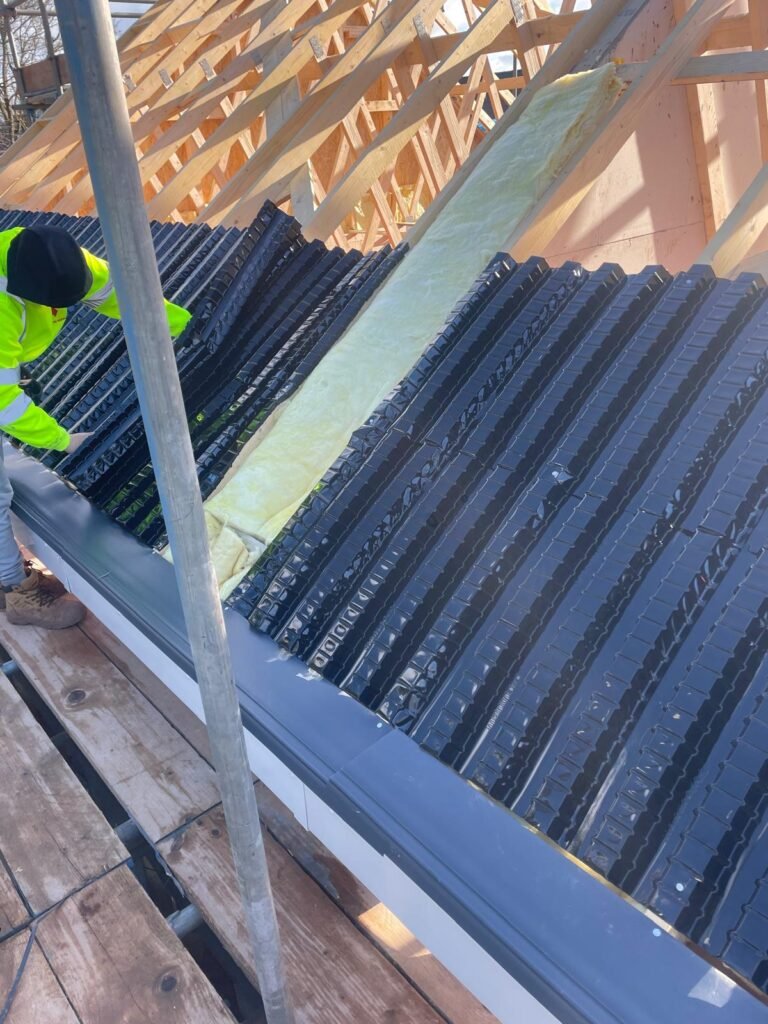
Installing felt underlay starting from the eaves with insulation underneath.
We always put the rafter roll on when insulation is in. This is so the felt and insulation don’t touch, this to prevent cold spots and condensation. You can attach the rafter roll to the rafters, using a tacker. Usually in my experience the only time you don’t add insulation is on garages, this is usually on new builds and is used to save costs and is usually not required by code if the garage is detached. How to Felt a Roof
2. Fix the Felt in Place
You can fix the felt with:
- Staples (quickest), or
- Clout nails (most secure)
Fixings spacing:
- Every 300–400mm horizontally
- Every rafter vertically
Avoid over-tensioning — felt should be snug, not stretched tight.
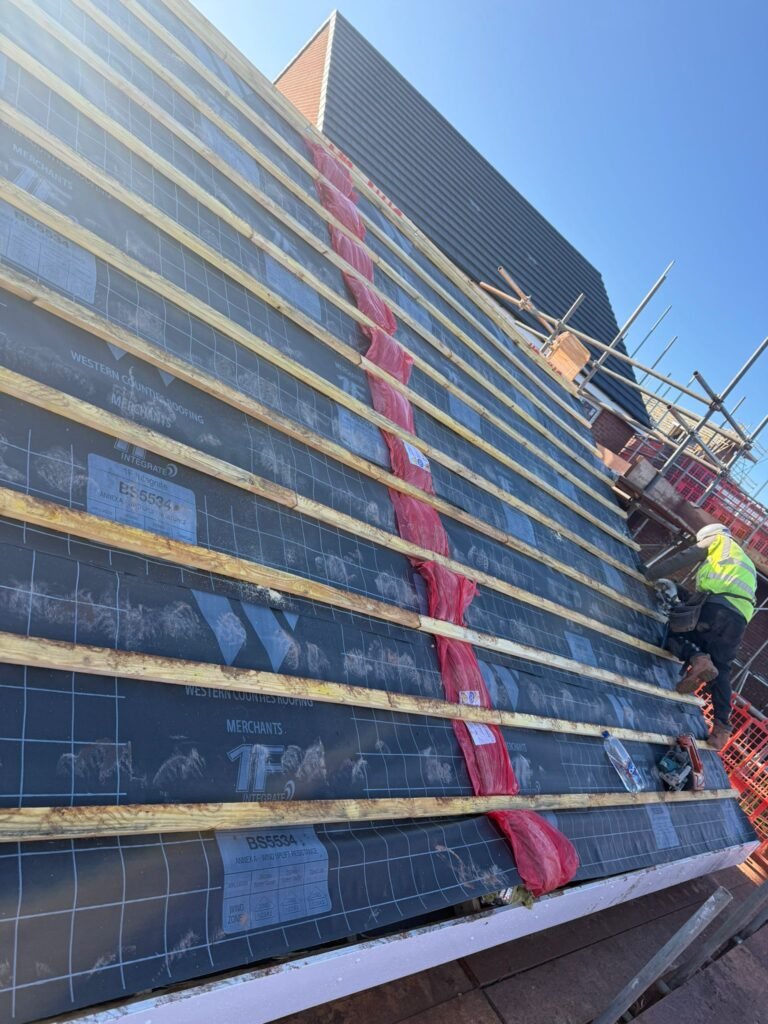
Roof felt underlay installed across rafters and held in place with battens.
On our sites, we always make sure the felt is pulled tight before fixing the battens. If there’s too much sag, the felt can pool water. How to Lay Roof Battens Correctly (Spacing, Rules & Best Practices)
3. Overlap Each Felt Run Correctly
This is where most beginners make mistakes.
- Standard overlap: 100mm
- Exposed windy areas: 150mm
- Vertical overlaps: 150mm and taped if required
Felt overlaps MUST follow manufacturer instructions — but the above is industry standard.
4. Felt Around Valleys, Hips & Dormers
For valleys:
- Run one sheet into the valley
- Run the opposite sheet over it
- Never leave a gap beneath the valley line
For hips:
- Wrap the felt neatly around the hip rafter
- Avoid cutting too short
For dormers:
- Lap felt up the sidewalls by 100–150mm
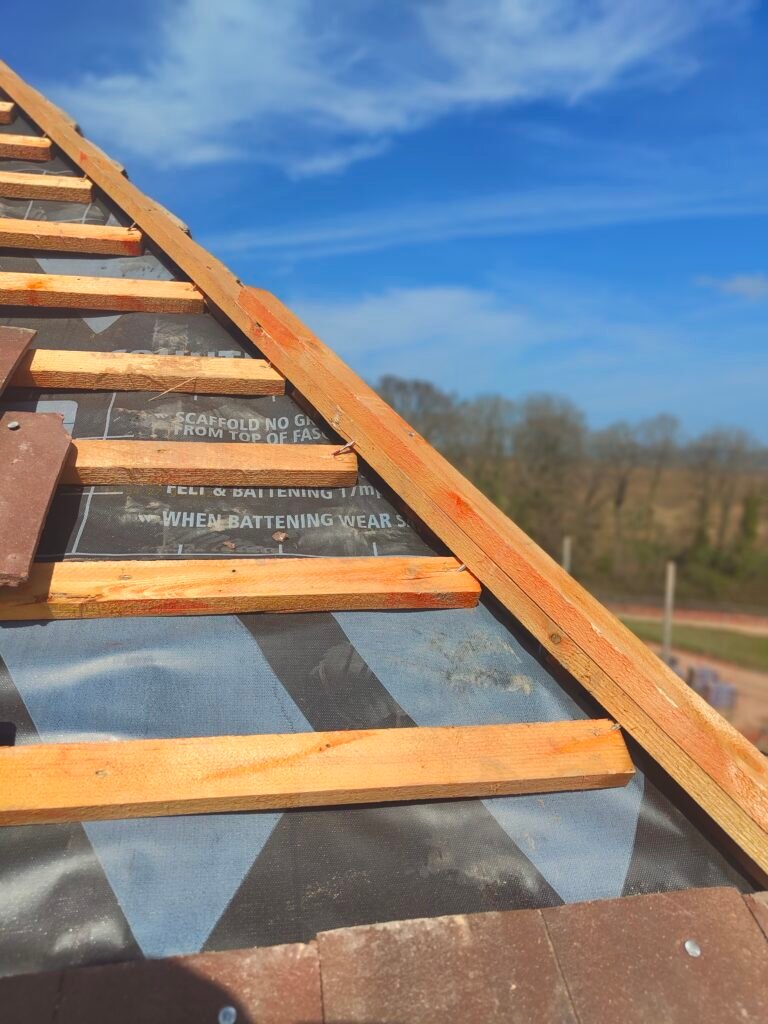
5. Check for Tears or Holes
Small tears can happen during installation.
Fix them by:
- Applying felt repair tape
- OR adding a patch with correct overlap
Never leave holes — they become wind entry points which lead to leaks.
Common Mistakes to Avoid
Overstretching the felt
Leaving overlaps too small
Not fixing enough staples/nails
Leaving vertical joints unsealed
Cutting felt too short at eaves or ridge
Forgetting counter-batten ventilation on warm roofs
Pro Roofer Tips
- On windy days, only unroll short sections at a time.
- Always secure corners first to prevent the membrane lifting.
- Store felt rolls in dry, warm conditions—cold felt tears easier.
- Keep the felt smooth. Creases trap water.
FAQ
Can you felt a roof without removing old tiles?
No — the membrane must sit directly on rafters or insulation.
How long does roof felt last?
Modern breathable membranes last 25+ years if installed correctly.
How much felt do I need?
Correctly installing roof felt is essential for keeping your roof weather-tight and protecting the structure beneath your tiles. When laid properly, roof felt helps shed wind-driven rain, prevents moisture ingress, and allows the roof to breathe.
By following the steps in this guide — starting at the eaves, using the correct overlaps, and fixing the membrane properly — you can avoid many of the common issues that lead to leaks and premature roof failure.
Once the roof felt is installed, the next stage is fitting the battens accurately so the tiles can be fixed securely.
Pingback: Do Roof Battens Need Treating? (What We Actually Use on Site) - rooflogicinc.co.uk
Pingback: How to Install Roof Battens - rooflogicinc.co.uk
Pingback: How to Install Roof Battens in a Valley (Beginner-Friendly Guide) - rooflogicinc.co.uk