You don’t always need to get up on a roof to know something’s wrong. Many roofing issues show early signs that can be spotted safely from the ground, if you know what to look for.
From experience, uneven tile lines, missing tiles, or staining on walls are often the first clues that a roof needs attention. Here’s how to spot common roof damage from the ground before it turns into a bigger problem.
Here’s how to check your roof without climbing up there.
Look for Uneven Tile Lines
Stand back and look along the roof.
Things to watch for:
- Wavy or uneven lines
- Tiles sitting higher than others
- Gaps where tiles don’t look right
These often indicate slipped tiles or problems underneath.
Uneven tile line usually mean tiles have potentially slipped or the fixing underneath have started to fail, for example the nail, hook or batten. This is common after strong winds and can allow water to track underneath the tiles, especially during heavy rain.

Check for Missing or Cracked Tiles
Missing tiles are obvious, but cracked tiles can be harder to see.
Look for:
- Broken corners
- Dark patches on tiles
- Pieces missing near edges
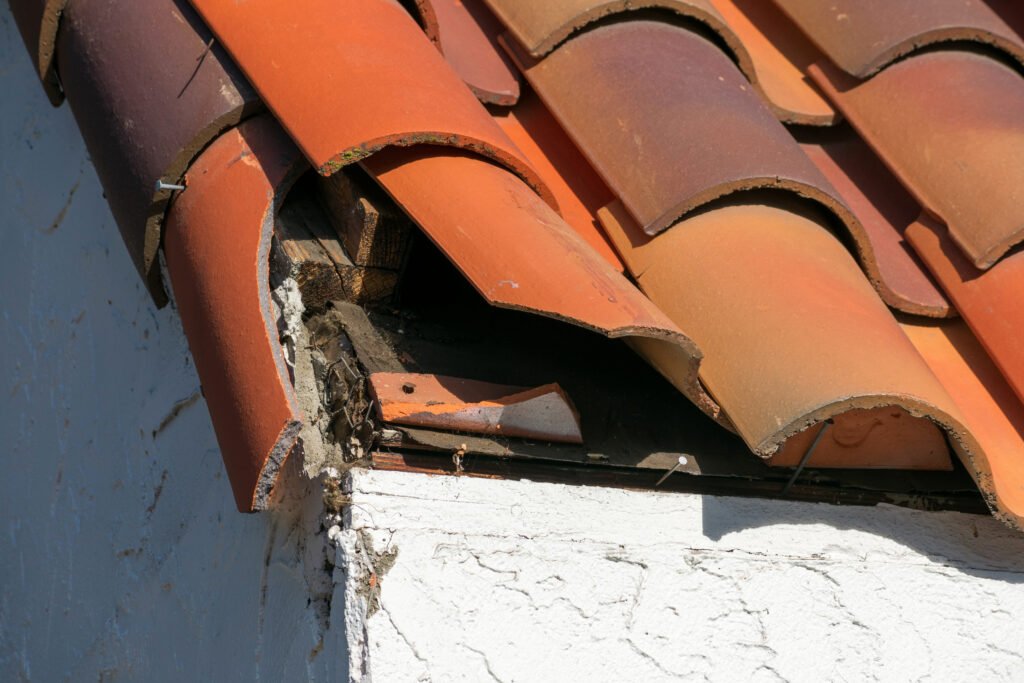
Missing tiles are usually easy to spot, but cracked tiles can be harder from the ground. Look closely for broken tile corners, uneven shadows, or tiles that don’t sit flat.
Even small cracks can let water in over time, particularly during winter when frost can make damage worse. This happen as water seeps into the tile and expands when the temperature drops, causing breaks and cracks.
Inspect the Ridge Line
The ridge should be straight and secure.
Warning signs include:
- Crooked ridge tiles
- Gaps in the mortar
- Ridge tiles that look loose or out of line
Ridge issues often show up after strong winds.
The ridge line should run straight along the top of the roof. If ridge tiles look uneven, cracked, or have gaps between them, it could indicate movement or failing mortar. Loose ridge tiles are a common cause of leaks and should be dealt with early, especially before bad weather.
Signs away From the Roof
Roof problems don’t always show on tiles themselves. Staining on external walls, overflowing gutters, or damp patches near the eaves can all point to an issue above. If gutters are regularly overflowing, it may indicate blockages or water backup under tiles.
Don’t Take Risks
Never try to climb onto a roof unless you have the proper equipment and experience. Wet, mossy, or damaged tiles can be extremely slippery. If you’re unsure, spotting issues from the ground and getting advice is always the safer option.
Watch for Staining or Damp Marks
Dark streaks or staining on tiles can point to:
- Water tracking
- Failing felt underneath
- Blocked gutters causing overflow
These marks often get worse over time.
Check Gutters and Valleys
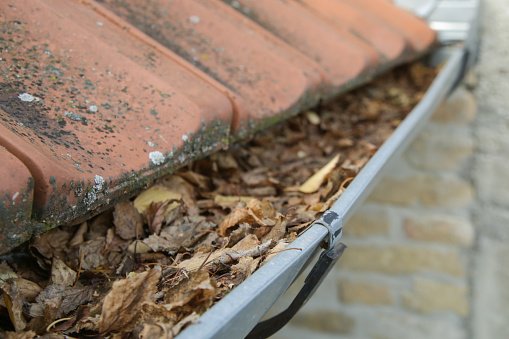
Overflowing gutters can hide roof problems.
Look for:
- Plants or moss growing out
- Debris collecting in valleys
- Water spilling over the edge during rain
Signs Inside the House
Even from the ground, indoor signs matter:
- Damp patches on ceilings
- Peeling paint near roof lines
- Mould around the loft hatch
These usually mean water is getting in somewhere above.
When to Get It Checked Properly
If you spot anything unusual, it’s best to get it looked at before it gets worse. Small issues are far easier to deal with early on. How Often Should You Check Your Roof?
Final Thoughts
You don’t need to be a roofer to notice when something doesn’t look right. Regular visual checks from the ground can catch problems before they turn into leaks or damage. Its best to usually check roof in case of damage in the summer, much harder to repairs with the rain.
Spotting roof damage early can prevent much bigger repairs later on. If something doesn’t look right, it’s best to get checked sooner rather then waiting for a leak to appear inside the property.
Pingback: How Often Should You Check Your Roof? - rooflogicinc.co.uk
Pingback: Can a Roof Leak Without Any Missing Tiles? - rooflogicinc.co.uk
Pingback: What to Do If Your Roof Is Leaking After Heavy Rain - rooflogicinc.co.uk
Pingback: Why Roof Tiles Slip (And How to Stop It Happening Again) - rooflogicinc.co.uk
Pingback: How to Spot Rotten Roof Battens (Before Tiles Start Slipping) - rooflogicinc.co.uk