Rotten roof battens are one of those problems that often go unnoticed until tiles start slipping or cracking for no obvious reason. From the ground, the roof can look perfectly fine, while the timber underneath is slowly deteriorating.
From my experience, failing battens are usually discovered only after movement starts on the roof. Knowing the early signs can help catch the issue before it turns into a much bigger repair.
Why Roof Battens Rot in the First Place
Battens don’t usually rot on their own. It’s almost always caused by moisture getting where it shouldn’t.
Common causes include:
- Failed or poorly installed felt
- Blocked eaves ventilation
- Condensation in older roofs
- Leaks around valleys, chimneys, or abutments
When moisture is allowed to sit on timber for long periods, the battens begin to soften and lose strength. Once this happens, they can no longer hold fixings properly, which often leads to tiles working loose over time.
Signs Your Roof Battens May Be Rotten
You won’t always see this from outside, but there are a few tell-tale signs:
- Tiles slipping out of line
- Uneven or wavy tile courses
- Cracked tiles in the same area
- Nails pulling through or popping up
- Soft or crumbly timber when checked up close
If These symptoms often appear gradually. By the time tiles start slipping or cracking, the battens underneath may already be significantly weakened.
How Rotten Battens Affect Roof Tiles
Roof tiles rely entirely on battens for support. When battens begin to rot, nails can pull out and tiles lose there secure fixing. This is why rotten battens are commonly linked to slipping tiles, uneven tile lines, and repeat roof leaks.
How Roofers Check Battens on Site
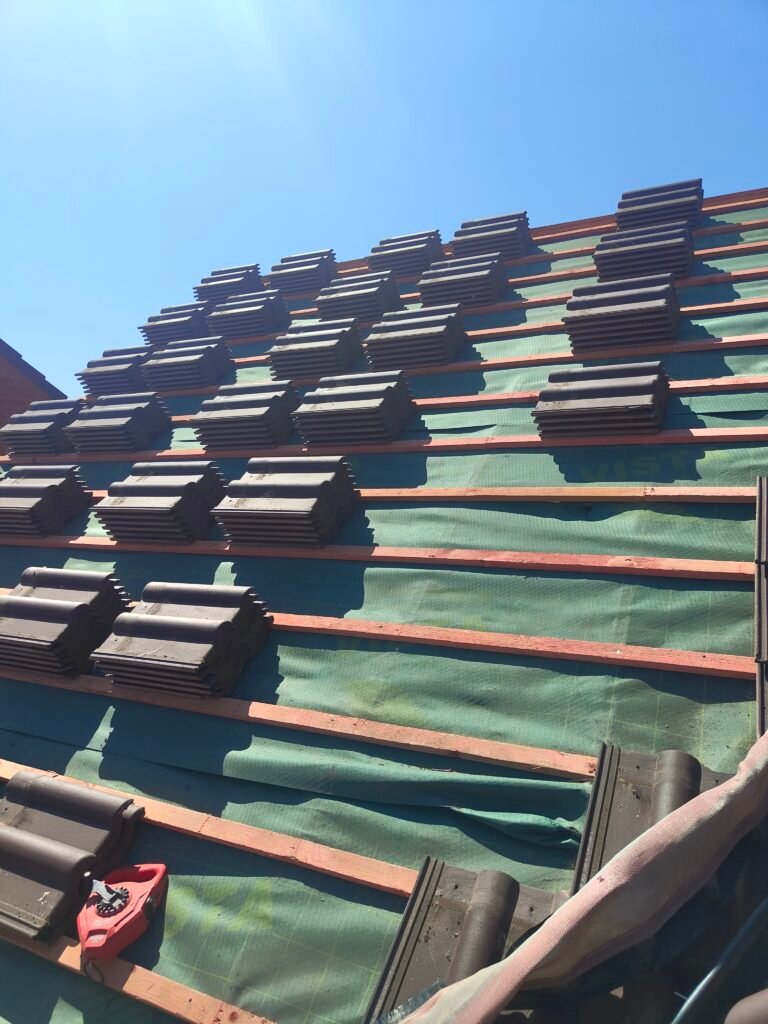
When tiles are lifted, battens should be:
- Firm to the touch
- Dry, not dark or damp
- Solid enough to hold nails properly
If you can push a screwdriver into the timber easily, the batten’s done.
Can Rotten Battens Be Repaired?
Small sections can be repaired, but only if:
- The surrounding battens are still solid
- The source of moisture has been fixed
- The spacing and gauge are kept consistent
If rot is widespread, patch repairs usually aren’t worth it. Replacing all battens is often quicker and safer in the long run.
What Happens If You Ignore Rotten Battens?
Leaving rotten battens in place can lead to:
- Loose or slipping tiles
- Water getting under the roof covering
- Further damage to rafters and insulation
- More expensive repairs later on
If rotten battens aren’t addressed, more tiles can begin to move, increasing the risk of leaks, and further timber damage. In many cases, leaving the problem untreated results in larger repair work than if it had been caught early.
Final Thoughts
Rotten roof battens aren’t always obvious at first, but they rarely improve on their own. Spotting the warnings signs early can help prevent slipping tiles, water ingress, and more extensive roof repairs.
Catching rotten battens early can save a lot of hassle — and money.
Pingback: Can You Reuse Old Roof Battens? (When It’s OK & When It’s Not) - rooflogicinc.co.uk
Pingback: Do Roof Battens Need Treating? (What We Actually Use on Site) - rooflogicinc.co.uk