This is one of those questions that comes up a lot, especially with DIYers and apprentices.
“Do roof battens need to be treated?”
In most cases, modern roof battens already are, but that doesn’t mean every piece of timber is suitable for roofing. From experience, the difference between battens that last and ones that fail early usually come down to the type used and how they’re installed.
Are Roof Battens Already Treated?
In the UK, most roof battens you buy today are:
- Pressure treated
- Graded to BS 5534
- Designed specifically for roofing use
If the batten is stamped BS 5534, they’ve already been pressure treated to the correct standard for roofing use. There’s no need to paint, soak, or spray anything extra onto them. Adding additional treatment can actually cause issues with fixings and doesn’t improve performance.
When Extra Treatment is Not Needed
In normal roof conditions, properly graded and treated battens don’t need any additional protection. They’re designed to cope with moisture exposure that occurs under tiles, as long as the roof is correctly ventilated and weathered.
Why Battens Sometimes Still Rot
When battens fail prematurely, it’s usually not because they weren’t treated. More often, it’s due to ongoing moisture issues such as failed felt, blocked ventilation, or leaks around a valleys and chimneys.
Treating timber won’t solve these underlying issues, fixing the moisture source will.
What We Actually Use On Site
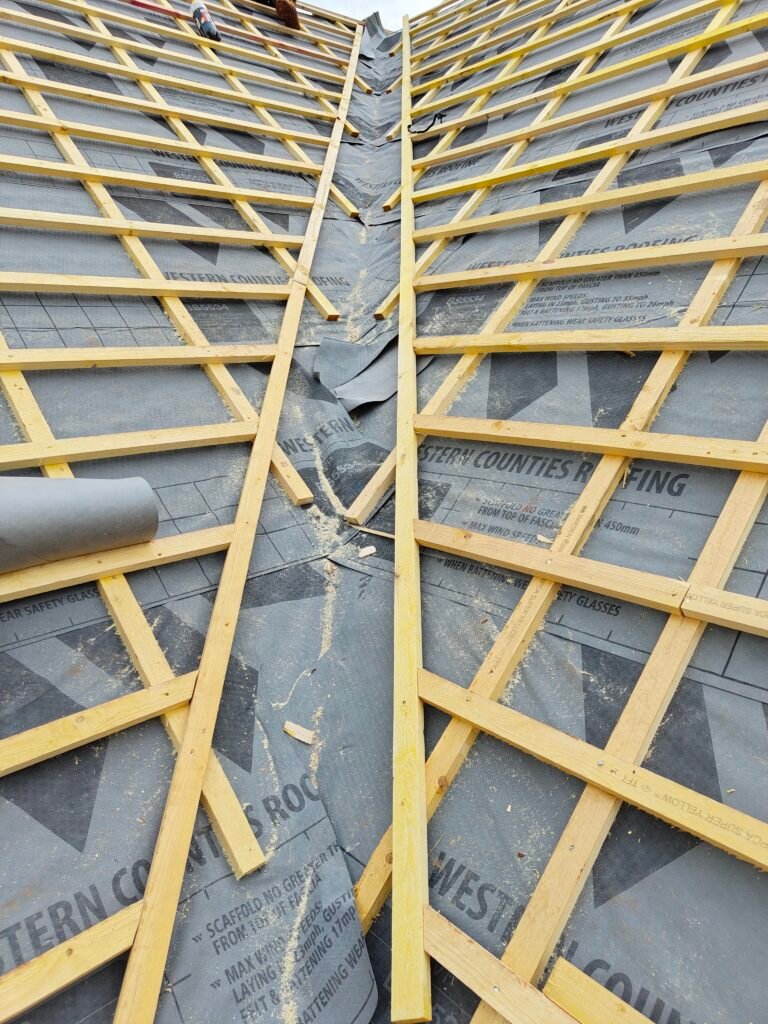
On site, we only use roof battens that are clearly stamped BS 5534 and suitable for roofing. If battens aren’t stamped or graded correctly, they don’t go on the roof. Also when we cut the batten for staggering, valleys or verge. We would cover the cut part of batten with treatment, usually have a brush or some insulation and use that to treat the battens.
What Happens If You Use Untreated Timber?
Using untreated timber instead of proper roof battens is asking for trouble.
Over time, untreated timber can:
- Absorb moisture
- Start to rot
- Lose strength
- Cause tiles to slip or crack
On older roofs, battens often fail because moisture gets trapped underneath, which is why correct installation of the underlay is just as important. Our guide on How to Felt a Roof explains this more detail.
Do Battens Ever Need Extra Treatment?
In most standard roofs, no.
However, there are a few situations where extra care makes sense:
- Exposed coastal areas
- Very shallow pitch roofs
- Poorly ventilated roofs
- Repairs on older properties
In these cases, the priority is still:
- Using graded battens
- Ensuring good ventilation
- Installing the felt and battens correctly
Adding paint-on treatment isn’t a replacement for doing the job properly.
What About Old Roofs?
If you’re stripping an old roof, always check the battens.
Signs battens need replacing:
- Soft or spongy timber
- Dark staining or rot
- Crumbling edges
- Nails pulling through easily
If you’re already re-felting or re-tiling, replacing the battens is usually the right move. It’s cheap compared to the cost of doing the roof twice.
I would personally look out for either rotten or uneven rafter, this a common occurrence in old roofs which were made during when British standards weren’t like there are now and the roofs are usually been impacted by weather.
Common Mistakes I See
These happen more than people think:
- Using cheap timber instead of real battens
- Mixing treated and untreated timber
- Assuming “it looks dry so it’s fine”
- Reusing old battens that should’ve been replaced
Battens are structural — they’re not something to cut corners on.
So, Do Roof Battens Need Treating?
No — as long as you use the right ones.
If you’re buying:
- BS 5534 graded
- Pressure-treated
- Roofing-specific battens
You’re doing it properly.
Anything else is a gamble.
If your installing battens from scratch, its worth reading our guide on how to lay roof battens correctly so everything lines up properly. How to Lay Roof Battens Correctly (Spacing, Rules & Best Practices)
Final Tip
If roof battens meet the correct standard, no extra treatment is needed. Making sure the roof is well ventilated and water tight is far more important than adding additional products to the timber.
A roof is only as good as what’s underneath it.
Pingback: How to Measure Batten Gauge for Roof Tiles - rooflogicinc.co.uk